Key Takeaways
- Choose a textured finish for traction. Broom, exposed aggregate and stamped concrete with an anti-slip additive are common choices.
- A concrete pool deck must slope away from the pool and the house so water drains off instead of pooling.
- The joint between the coping and the deck needs a flexible sealant so the two can move independently.
- Lighter colors stay cooler in the sun. Sealing protects the surface from pool water, chemicals and winter salt.
In This Guide
The deck around a pool works harder than almost any other concrete in your yard. It’s constantly wet, it bakes in the sun, it carries chairs and foot traffic all summer, and then it sits through a Michigan winter.
A well-planned concrete pool surround is comfortable on bare feet, gives good grip when it’s wet, drains properly and frames the pool. Whether you’re building around a new pool or planning a pool deck replacement, here’s what to think about.
How Much Pool Deck Do You Need?
Most pool decks feel crowded on a busy day because the lounging area was planned too small. Think in zones:
- Walking space all the way around the pool, wide enough for people to pass each other safely.
- A main lounging area for chairs and loungers, usually on the side that gets afternoon sun.
- A dining or shade area for a table and umbrella, ideally close to the house or grill.
- Connections to the house, the patio, the gate and the pool equipment.
Lay out your loungers and table on the lawn before your estimate. Lounge chairs take more room than you expect, especially once they’re reclined.
The Best Concrete Finishes for a Pool Deck
Traction comes first around water, followed by comfort on bare feet and how hot the surface gets in the sun.
- Broom finish: reliable traction and the most economical option. A lighter broom texture is more comfortable underfoot than a coarse one.
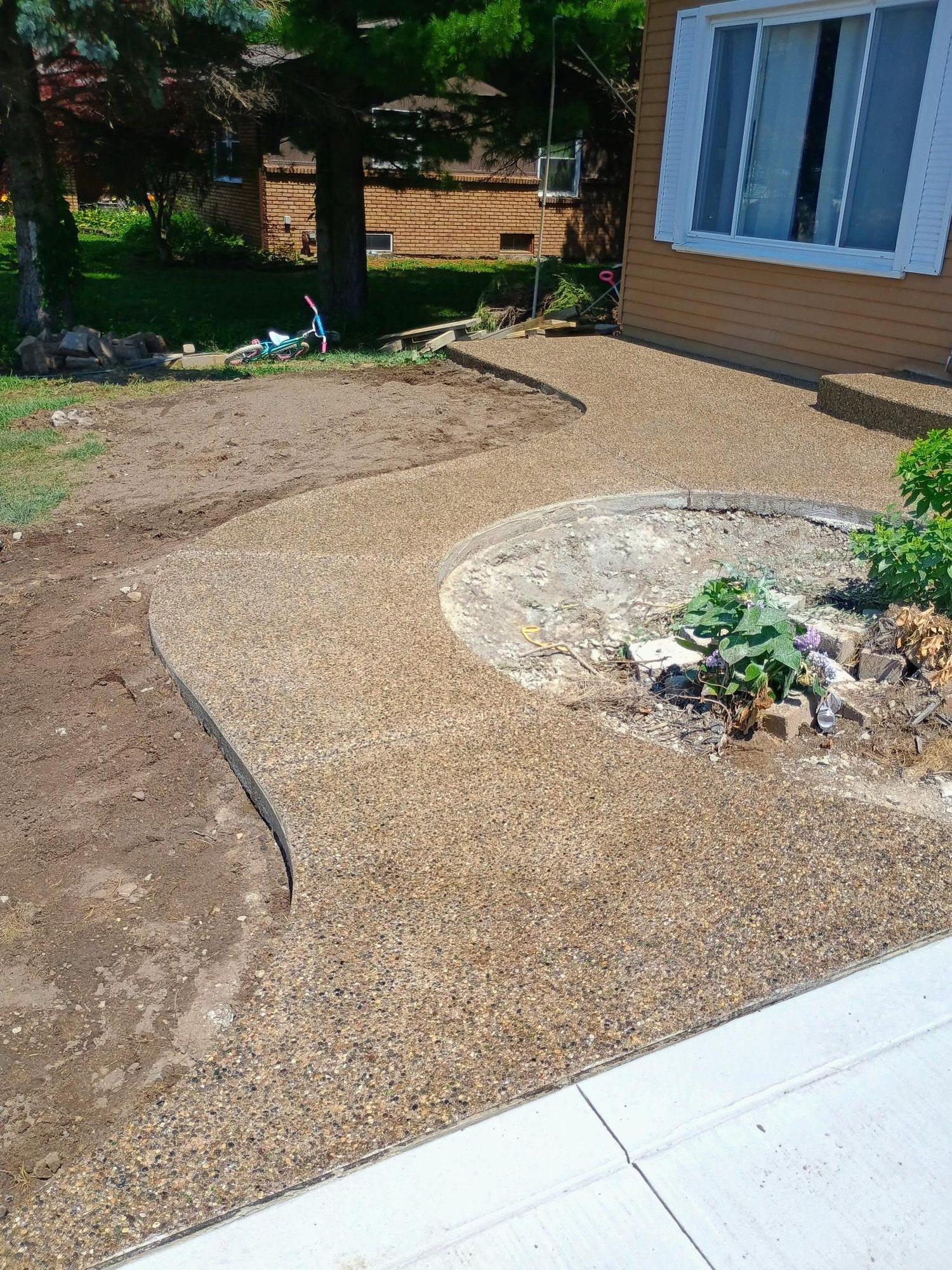
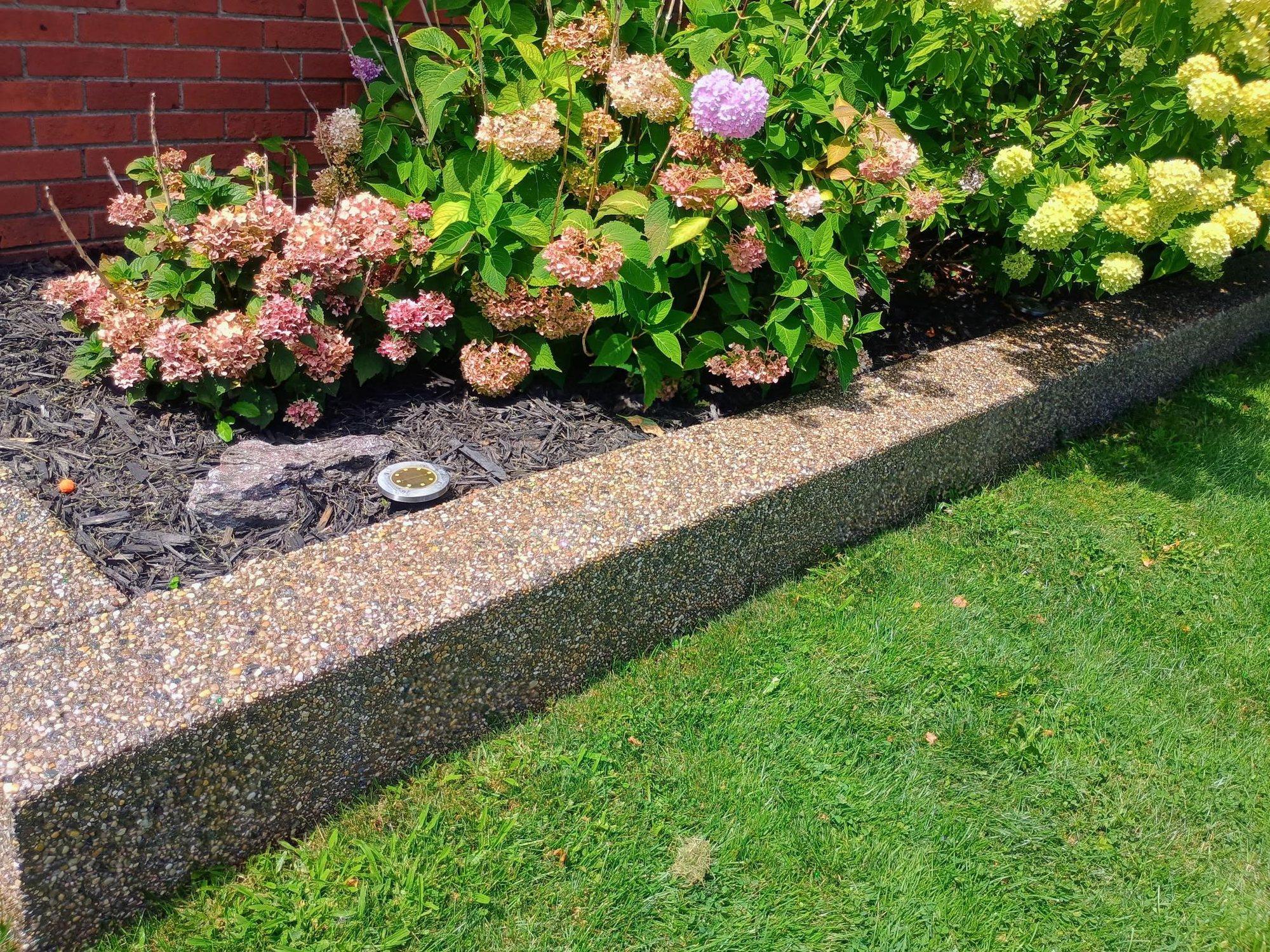
- Exposed aggregate: textured, slip-resistant and attractive. Smaller, rounded stones are generally more comfortable for bare feet than large, sharp aggregate.
- Stamped concrete: decorative patterns that look like stone or tile. Because sealed stamped concrete can be slick when wet, an anti-slip additive in the sealer is strongly recommended around pools.
- Smooth troweled concrete: looks clean but can be slippery when wet, so it’s generally a poor choice for walking areas around water.
Keep it cool
Dark surfaces absorb more heat. Lighter-colored concrete stays noticeably cooler underfoot on sunny days, which matters on a pool deck where everyone is barefoot.
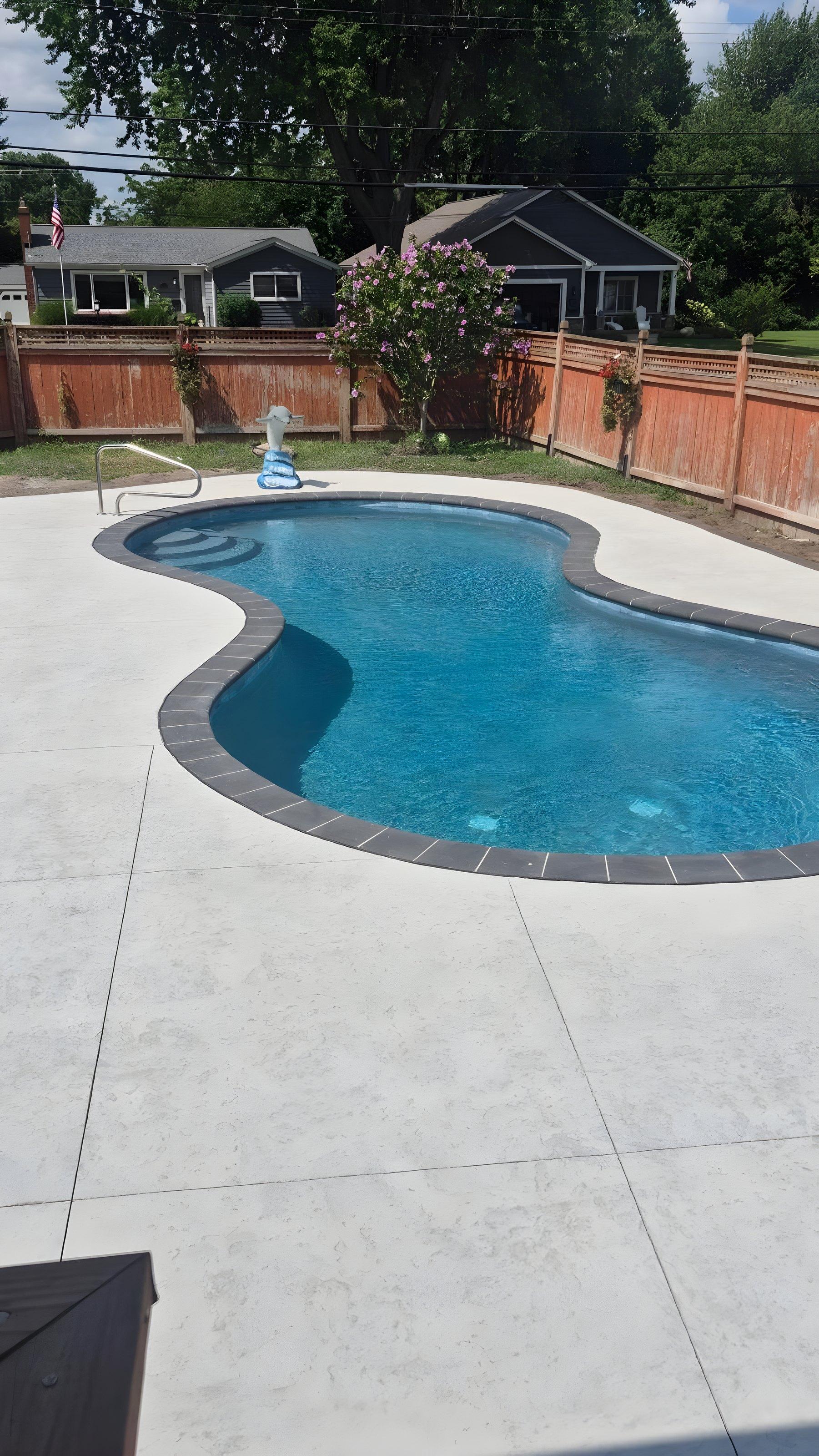
Drainage: The Most Important Detail
Pool decks see a lot of water, from splashing, wet swimmers and rain. If that water drains back into the pool, it carries dirt, grass and fertilizer with it. If it drains toward the house, it ends up at your foundation.
- The deck should slope away from the pool and away from the house.
- Where the deck is large or surrounded by structures, deck drains or a channel drain may be needed to collect water.
- Water should leave the deck toward lawn, a drain or a dry well, not toward a neighbor’s yard.
The slope is gentle, not something you’ll feel when you walk on it, but it has to be planned and formed correctly before the pour.
The Coping Joint and Expansion Joints
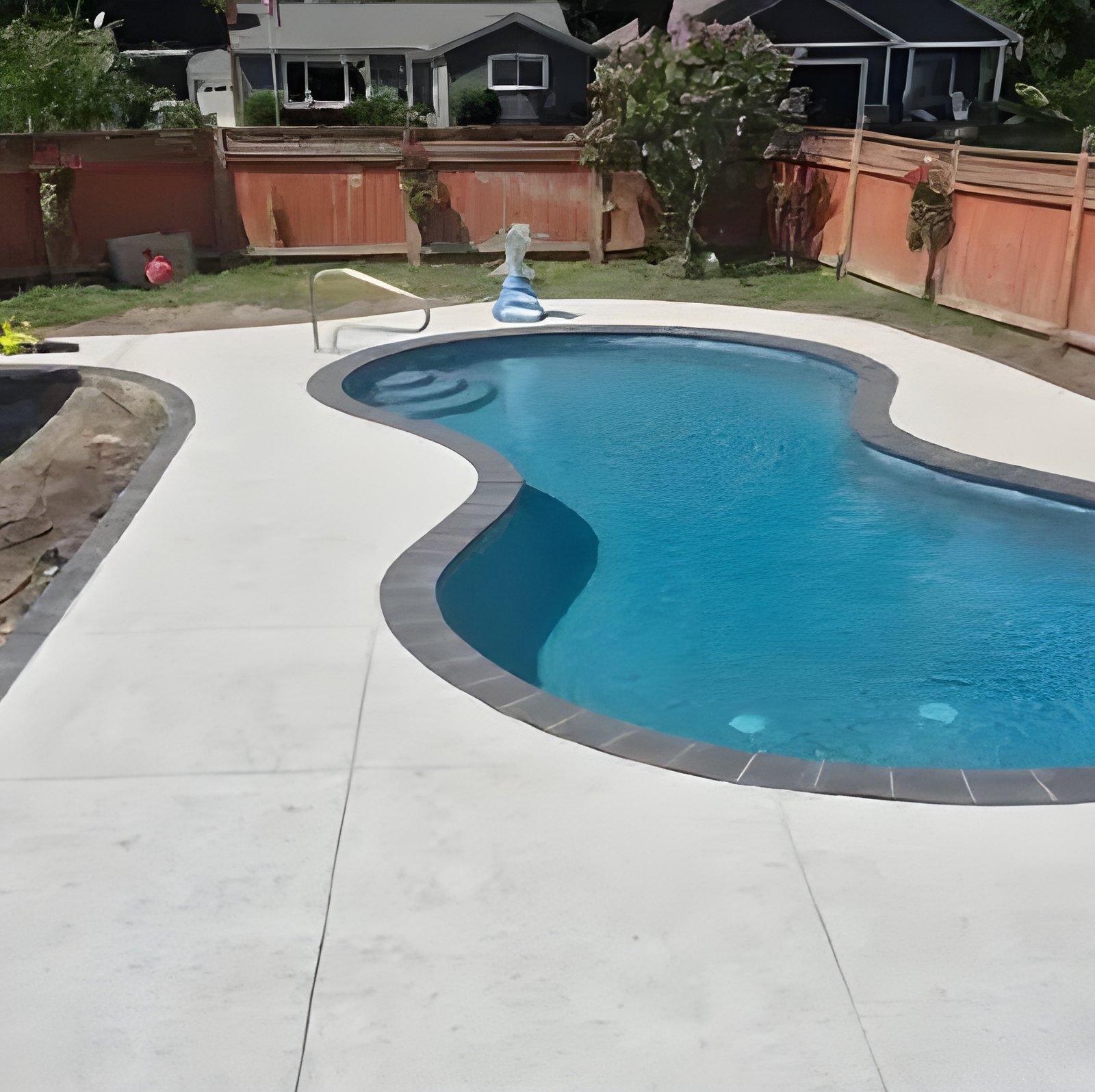
The pool shell and the deck move differently as temperatures change. The joint where the deck meets the pool coping is typically filled with a flexible sealant rather than hard material, so the deck can expand and contract without pushing against the coping. That sealant wears over time and should be inspected and replaced when it cracks or pulls away.
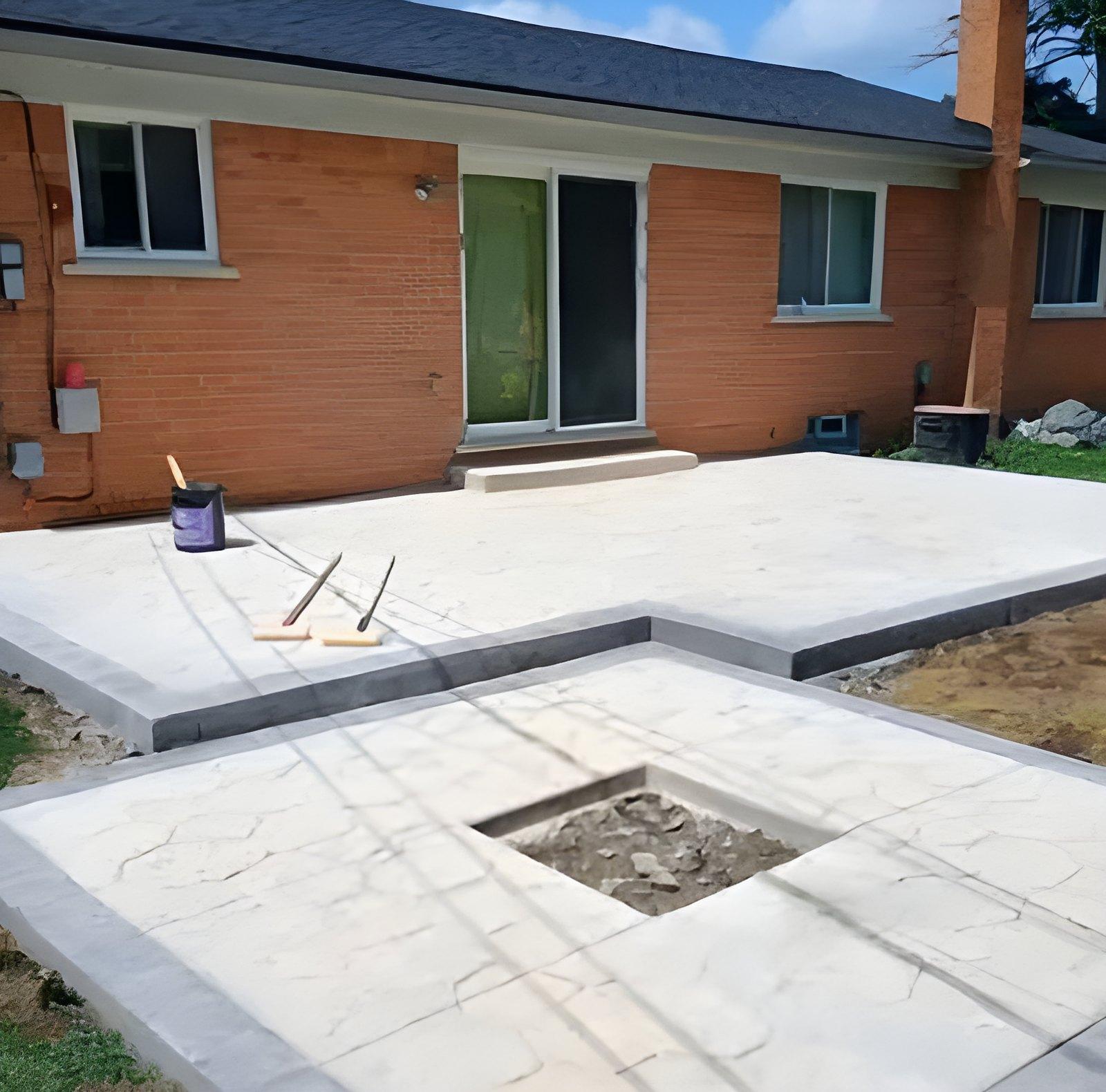
Control joints across the deck guide where the concrete cracks as it shrinks. Planned well, they can follow the shape of the pool and look like part of the design.
Pool Decks and Michigan Weather
In Michigan, a pool deck has to survive winter as well as summer. Water that soaks into the concrete and freezes can damage the surface, and salt tracked in from the driveway doesn’t help.
- Seal the deck to reduce how much water, pool chemicals and salt soak in. Our guide on how often to seal concrete covers sealer types and timing.
- Saltwater pools can be harder on concrete, so keeping the surface sealed is especially important.
- Avoid de-icers on the pool deck. It rarely needs to be walkable in winter.
- Rinse the deck after heavy use or chemical spills.
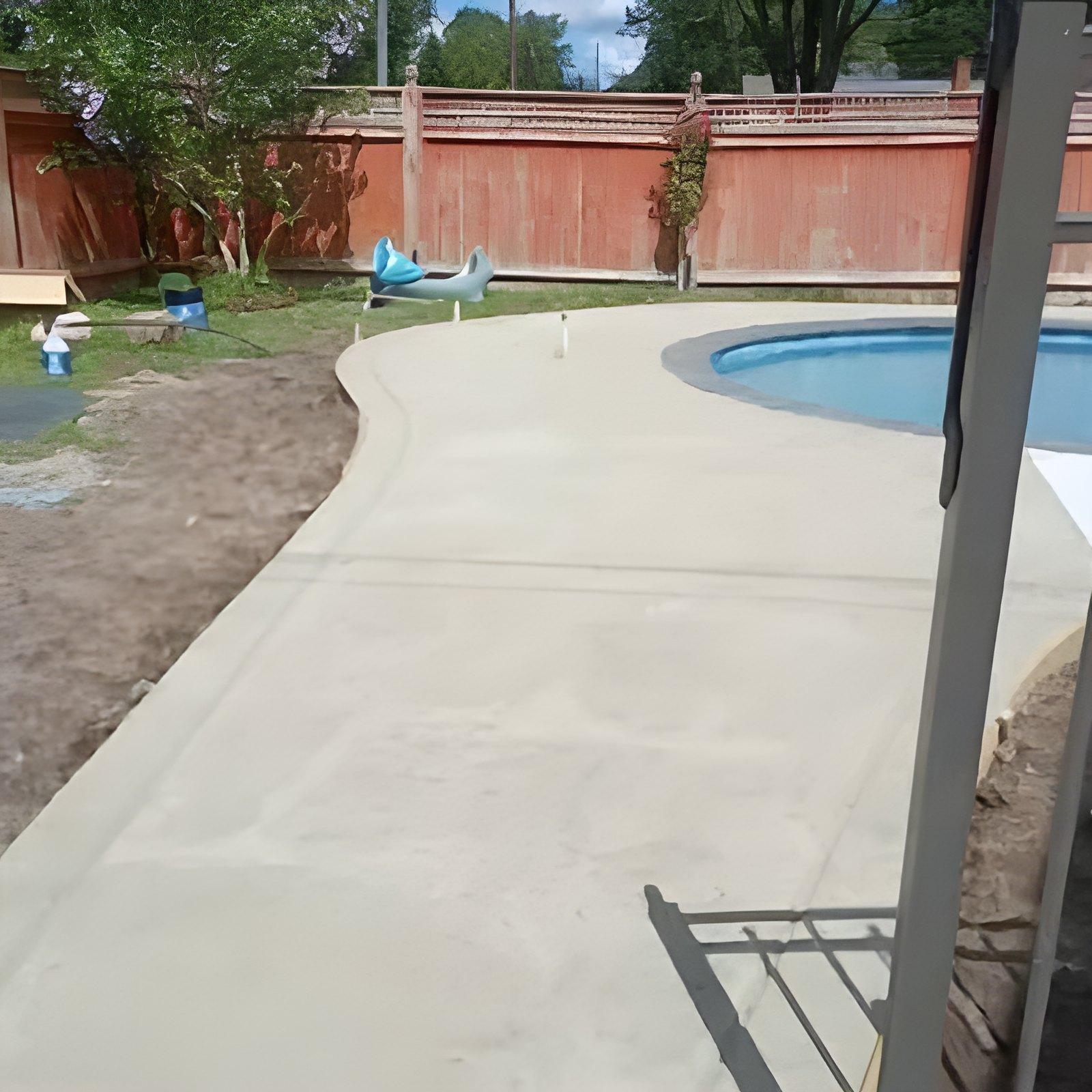
Replacing an Existing Pool Deck
Cracked, sunken or heaved pool decks are trip hazards and can let water get behind the pool wall. A pool deck replacement is common, but it takes more care than a typical patio:
- Old concrete has to be removed without damaging the pool, its coping or its liner.
- Settled areas usually point to a base or drainage problem that needs to be fixed, not just covered.
- The new deck has to meet the coping at the right height and slope away from it.
We assess the condition of the pool, the coping and the surrounding grade on site before recommending an approach.
Timing Your Pool Deck Project
Most Michigan homeowners want the deck ready for summer. Planning ahead helps:
- Schedule the estimate early, since spring is busy for concrete contractors.
- Plan the work around your pool’s opening or closing, and coordinate with your pool company if they’re doing work too.
- Allow time for the concrete to cure before heavy furniture goes on it, and before sealing.
- Confirm fencing and pool barrier requirements with your building department if the project changes your yard’s layout.
Enzo’s Concrete builds concrete pool decks across Macomb County, including pool decks in Harrison Township and pool decks in Shelby Township. A pool deck often connects to a patio or garden wall, so it’s worth planning them together.
Frequently Asked Questions
- What is the most slip-resistant concrete for a pool deck?
- Textured finishes such as broom and exposed aggregate give good traction when wet. Stamped concrete can be slip-resistant too when an anti-slip additive is used in the sealer.
- How hot does a concrete pool deck get?
- It depends on color and sun exposure. Lighter colors stay cooler than dark ones, which is why light tones are popular around pools.
- Can you replace the deck without damaging my pool?
- Yes, with care. Removal is done carefully near the coping, and the condition of the pool and coping is checked before the new deck is formed.
- Should a pool deck be sealed?
- Sealing is recommended for most pool decks. It reduces how much water, pool chemicals and salt soak into the surface and makes the deck easier to clean. Ask about anti-slip additives if the sealer adds shine.
Ready for Your Own Pool Deck Project?
See finished work and what to expect on our concrete pool decks page, browse the project gallery, or call or text (586) 231-4217 to talk through your plans.